
Start with the thirty-second check
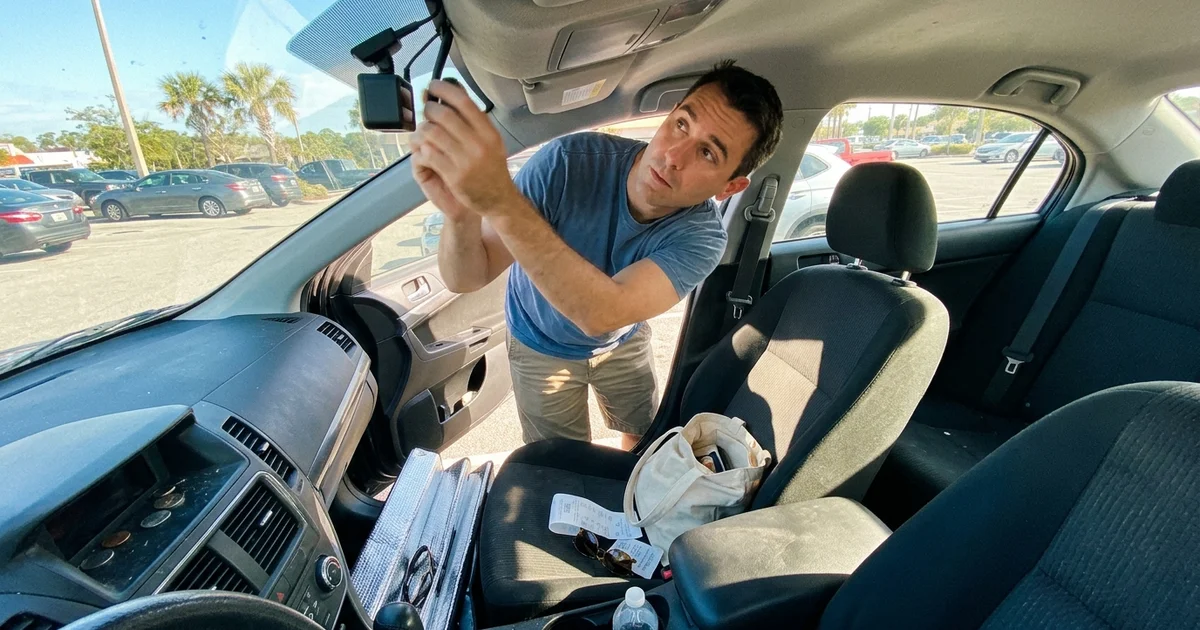
Before looking anything up, do this. Sit in the driver’s seat and look at the top centre of the windshield, right behind the rear-view mirror.
- Black housing with one or two lenses pointing forward, you have a camera-based driver-assist system, and it will need calibration after glass replacement.
- Nothing but the mirror mount and maybe a rain sensor, you probably don’t. A rain sensor is a small gel-backed puck, not a camera, and it doesn’t require calibration.
- Two separate lenses spaced apart near the top corners, that’s a stereo camera setup, most famously Subaru EyeSight, and it always requires a static procedure.
If you find a camera, our mobile ADAS calibration service handles the recalibration in the same visit as the glass, so there’s no second appointment to book.
Systems by manufacturer
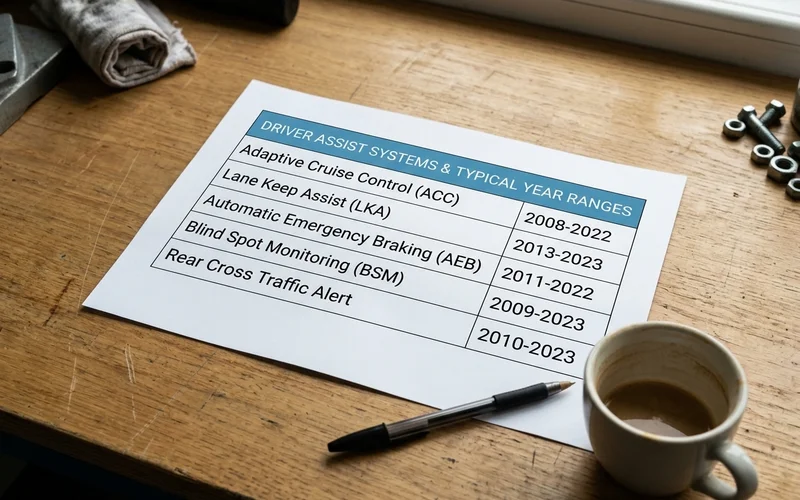
Manufacturers market the same underlying technology under different names. Here are the ones we see most often on Florida roads.
| System name | Brands | Common from |
|---|---|---|
| Toyota Safety Sense | Toyota, Lexus | 2016, near-universal by 2018 |
| Honda Sensing / AcuraWatch | Honda, Acura | 2016, near-universal by 2019 |
| Ford Co-Pilot360 | Ford, Lincoln | 2019 |
| Nissan / Infiniti ProPILOT Assist | Nissan, Infiniti | 2018 |
| EyeSight | Subaru | 2015 (stereo camera, static only) |
| Hyundai SmartSense / Kia Drive Wise | Hyundai, Kia, Genesis | 2018 |
| Chevy Safety Assist | Chevrolet, GMC, Buick | 2019 |
| Autopilot hardware | Tesla | 2015 |
Why model year alone isn’t the answer
Two identical-looking cars in the same parking lot can differ. For several model years the driver-assist package was optional on base trims, so a 2019 sedan might have the full camera suite or nothing at all depending on how it was ordered.
Mid-cycle refreshes complicate it further. Manufacturers regularly add or move the camera partway through a generation, which means the same nameplate can need a different procedure depending on build month.
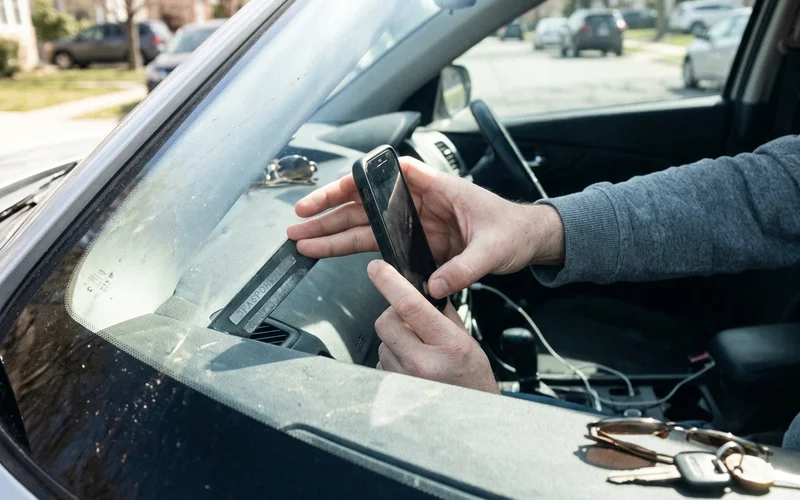
That’s why we work from the VIN rather than the model year. The VIN tells us the exact build, including the option packages, and from there we look up the manufacturer’s specified procedure, static, dynamic, or both. If you’d like the background on what those procedures involve, our guide on what ADAS calibration is covers it.
Features that tell you the camera is there
If you’d rather check from the driver’s seat than the windshield, look for these in your dashboard or settings menu:
- Lane departure warning or lane-keep assist
- Adaptive or radar cruise control that maintains a gap
- Automatic emergency braking / forward collision warning
- Traffic sign recognition showing speed limits in the cluster
- Automatic high-beam switching
Any one of those on a vehicle built in the last decade almost certainly means a windshield camera.
What else can trigger a calibration requirement
Windshield replacement is the most common reason, but it isn’t the only one. Your vehicle may also need recalibrating after:
- A wheel alignment or suspension work. The camera is aimed relative to the thrust line of the vehicle. Change the alignment and the reference changes with it.
- Front-end collision repair, even minor, if the bumper, grille, or radiator support moved.
- Mirror or camera bracket replacement, including a bracket that was knocked loose.
- Ride-height changes from a lift kit, lowering springs, or a permanent heavy load.
- A camera module replacement, which always needs calibration to the new unit.
If any of those happened before your glass work, mention it. It can change which procedure your vehicle needs.
Radar isn’t the same as camera
Some adaptive cruise systems use a radar unit behind the front grille instead of a windshield camera. Those aren’t affected by glass replacement. Plenty of vehicles have both, which is why the VIN check is worth the minute it takes.
Trim levels are where people get caught out
Two owners of the same model year can get different answers, and it’s usually the trim that explains it. Manufacturers bundled driver-assist into option packages for years before making it standard, so a base sedan and the same car one trim up can be built completely differently behind the mirror.
Leased and fleet vehicles are the common surprise. Fleet buyers often specify the lowest package available, which means a two-year-old vehicle that looks modern in every other respect may have no forward camera at all. The reverse happens too: a used car bought from another state can carry an options package that wasn’t common locally.
None of this is a problem, it just means the model year on its own isn’t a reliable answer. The VIN is, and it takes us under a minute to check.
The easiest way to find out
Send us a photo of the top of your windshield from inside the car, plus your VIN, it’s on the plate at the base of the windshield on the driver’s side, or on your registration. We’ll confirm whether calibration is required, which procedure your vehicle takes, and whether your insurance covers it alongside the glass. No charge for the answer.